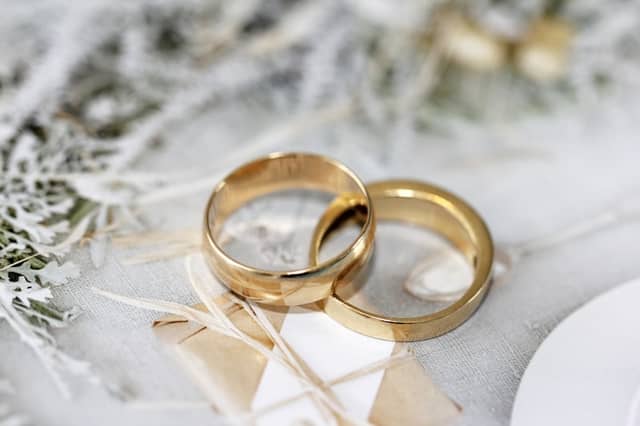
For a men's wedding band worn every day, decide three things in order: the metal (karat gold or platinum), whether it carries stones, and whether it can be resized later. A plain gold or platinum band is the easiest to live with, because it can be resized when your hand changes; bands with stones all the way around are limited or cannot be resized.
Gold or platinum for a men's band?
Both are excellent for daily wear; the difference is color, maintenance and cost.
- Gold is sold as an alloy, and the karat tells you how much gold is in it: 24 karat is fine gold, 14 karat is 14 parts in 24. The FTC treats it as misleading to call an alloy "gold" unless "a correct designation of the karat fineness of the alloy immediately precedes the word "Gold"" (16 CFR 23.3). So look for "14k gold," "14k white gold" and so on.
- Platinum marked simply "platinum" should be at least 950 parts per thousand pure: the FTC says the unqualified word is misleading for a product "that is not composed throughout of 950 parts per thousand pure Platinum" (16 CFR 23.6). It is naturally white and costs more than 14k or 18k gold in a custom piece.
Why does a white gold band turn yellowish?
White gold is usually plated with rhodium for its bright white finish, and the plating wears thin over one to two years of daily wear. Rhodium replating restores the color without changing the band; it is routine work at our repair counter. The FTC also says sellers must disclose rhodium plating: "It is unfair or deceptive to fail to disclose a surface-layer application of rhodium on products marked or described as precious metal" (16 CFR 23.7).
What does "solid gold" have to mean?
That the band is not hollow. Hollow-center gold products, the FTC says, "should not be marked or described as "solid"" (16 CFR 23.3).
Can a men's wedding band be resized?
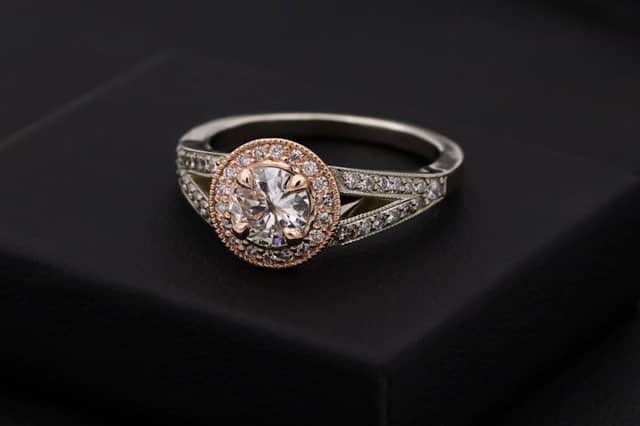
Most gold and platinum bands can. A jeweler cuts the band, adjusts its length, re-solders the seam and polishes the join until it disappears. Plain bands are the simplest; bands with pavé or detail all the way around take more care; full eternity bands and some tension settings are limited or cannot be resized. If you are buying a band in a non-precious alternative metal, ask before you buy whether it can be resized at all.
One more thing to know: a band that has been cut and re-soldered many times weakens at the seam, so size it carefully the first time. Our ring sizing guide helps.
Should a men's wedding band have diamonds?
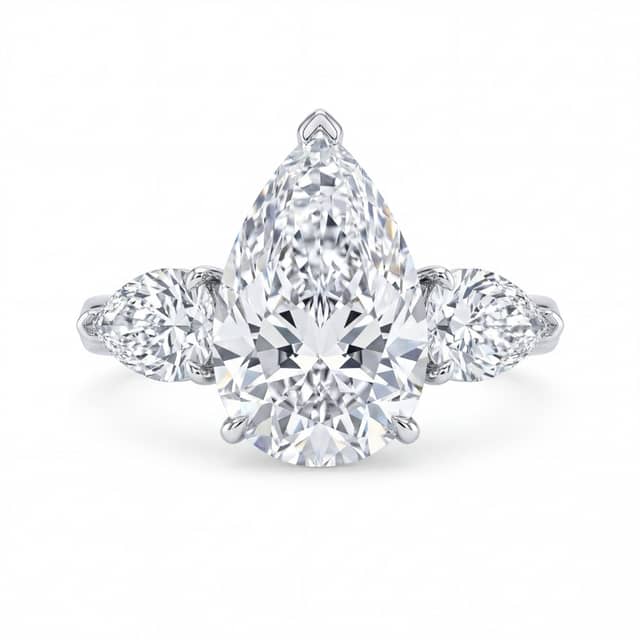
If you like them, yes, with two practical notes. Stones set around the whole band limit resizing, as above. And small stones depend on prongs or channels that wear with daily contact, so a band with diamonds should be cleaned and checked every six months; catching a worn prong early is far simpler than replacing a lost stone. If the diamonds are lab-grown, the description has to say so (16 CFR 23.25).
Width, profile and finish
These are personal; try several on. Wider bands read bolder and feel more present on the hand; domed profiles feel softer to wear than flat ones; a polished finish shows the metal's color most, while a brushed finish has a quieter look. Fit should be snug enough to pass over the knuckle with slight resistance.
Want a band made for you?
We design custom wedding bands at our Paramus showroom: consultation, sketches, a 3D CAD model you can adjust, then casting, hand finishing and setting. A straightforward design typically takes three to five weeks. Start with our custom design service, read how to match a band to an engagement ring, compare metals in gold vs. platinum, or book a visit.