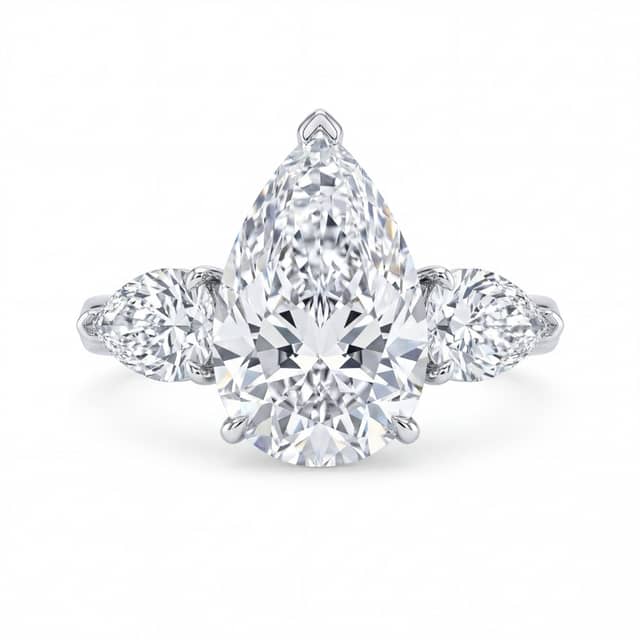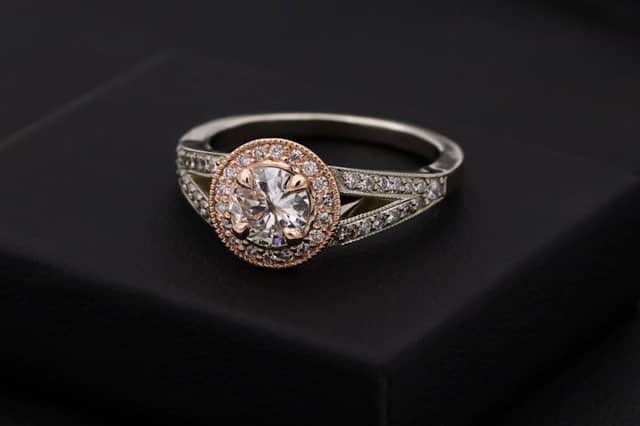
An engagement ring setting is the metal that holds the stone, and the choice comes down to light versus protection. A prong setting lets the most light into the diamond; a bezel wraps the edge in metal for the best protection and the least snagging. Styles such as solitaire, halo, three-stone and pavé describe the overall design and can use either.
What are the parts of a ring setting?
GIA breaks a setting into three parts: the head, which holds the stone; the shoulders, where the band rises toward it; and the shank, "the circular part of the ring that wraps around the finger (commonly called the band)" (GIA, Complete Guide to Engagement Ring Settings). It also separates settings (how the stone is held, such as prongs or a bezel) from setting styles (the overall design, such as a solitaire or three-stone ring).
Prong vs. bezel: which is better for an engagement ring?
| Prong | Bezel | |
|---|---|---|
| How it holds the stone | Narrow metal tips over the edge | A thin rim of metal around the whole edge |
| Light and sparkle | Maximum light into the stone | Slightly less light |
| Protection | Edges exposed | Excellent resistance to chips |
| Snagging | Raised tips can catch on fabric | Smooth; rarely catches |
| Upkeep | Check prongs; retip as they wear | Low |
GIA calls the prong setting "one of the most widely used engagement ring settings because it holds a gemstone securely while allowing maximum light to enter the stone," and notes that prongs "should be checked occasionally" and "can sometimes catch on fabrics." Of bezels, it says the smooth edges make them "a practical choice for people who work with their hands, such as nurses, or anyone with an active lifestyle." If you want sparkle above all, choose prongs; if you use your hands hard every day, a bezel is the safer ring.
How many prongs should a diamond have?
Most round diamonds use four or six; "the larger the stone, the more prongs it needs." Fewer prongs show more of the stone, more prongs add security, and on a round diamond "four prongs may make the stone appear slightly squarer, while six prongs tend to emphasize and enhance the stone's round shape." Pointed shapes such as pear, marquise, heart and princess are best held with V-shaped prongs that wrap the corners.
What setting works best for an oval, round or emerald cut?
- Round: four or six prongs, or a bezel for an active life; a basket setting adds support under larger stones.
- Oval: four or six prongs, or an under-halo to add sparkle from the side without changing the outline, as on our 1.70 ct under-halo lab-grown ring.
- Emerald and radiant: four corner prongs or a bezel; corner protection matters on squared shapes.
- Pear and marquise: a V-prong on each point.
What other settings and styles are there?
- Halo: a ring of small stones around the center that "can make it appear larger"; more small stones to keep clean and secure. See our halo guide.
- Three-stone: a center with two side stones; for all-diamond rings, GIA suggests side stones "within about two color grades of the center stone." See three-stone rings and our radiant with trapezoid side stones.
- Pavé: small stones set closely along the band or halo for continuous sparkle.
- Channel: stones set between two metal walls, common on wedding bands, well protected.
- Tension: the stone held by pressure between the band's ends; striking, but "a hard blow can potentially shift or loosen the stone."
- Toi et moi: two stones side by side, French for "you and me."
Which settings are hard to resize?
Check this before you buy, especially for a surprise. GIA notes that channel-set and bar-set rings "can be difficult to resize," pavé bands "can also be more difficult to resize, since adjusting the ring may disturb the small stones," and tension-set rings "can be very difficult—and sometimes impossible—to resize." In our own resizing work, plain bands and solitaires are simple, rings with pavé all the way around take more care, and full eternity bands and some tension settings are limited or cannot be resized. Our ring sizing guide helps you get the size right first.
How do you keep a setting secure?
Prongs wear down slowly, and GIA says they "may require re-tipping—the process of rebuilding worn prong tips by adding metal." Open and delicate designs such as prong and pavé settings "benefit from periodic inspection." We recommend a professional cleaning and prong check about every six months for rings you wear daily; it is part of our cleaning and inspection service. If a stone rattles when you tap the ring gently near your ear, stop wearing it and bring it in.
Want a setting that is not in our collection? We build them through custom design, with a CAD model you can adjust before anything is cast.