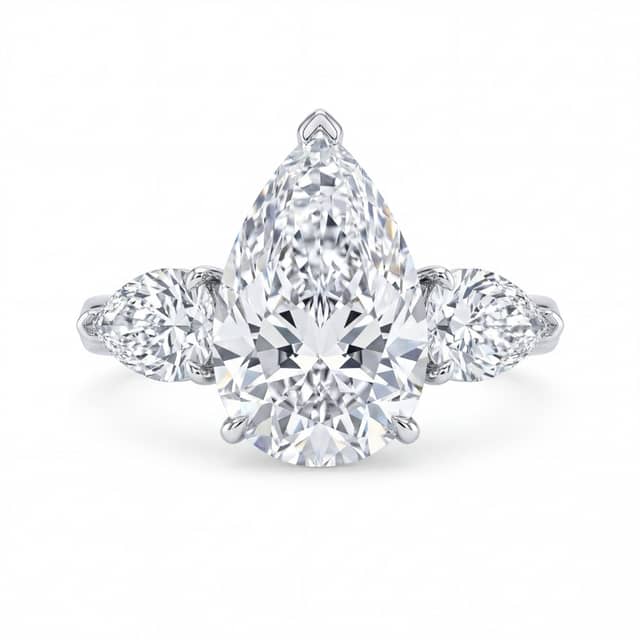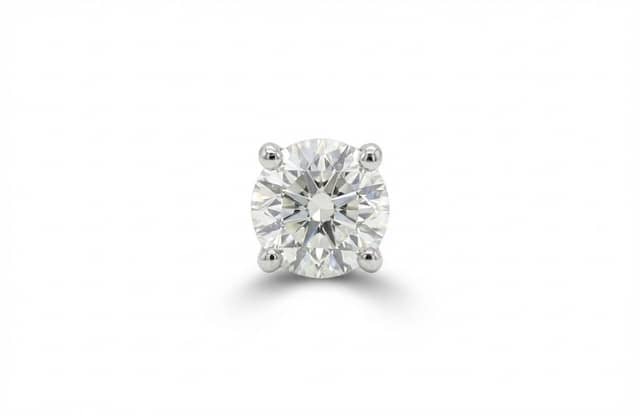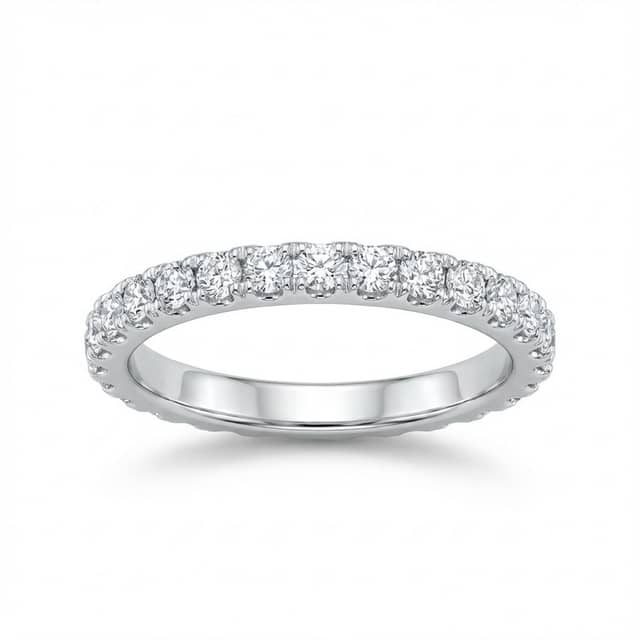
Lab-grown and natural diamonds are the same material with different origins and very different prices. In The Knot's 2026 study, couples who chose lab-grown spent $4,300 on average for a 2.0-carat center stone, while couples who chose natural spent $7,000 for 1.6 carats. The trade-off is resale: a lab-grown diamond is best bought to wear, not as something to sell later.
Are lab-grown diamonds the same as natural diamonds?
Physically, yes. GIA says lab-grown diamonds "have the same crystal structure, consisting of tightly bonded carbon atoms. This results in nearly the same chemical, optical and physical properties as natural diamonds. By eye, the difference can potentially be indistinguishable" (GIA, Simulants, Moissanite and Lab-Grown Diamonds). The difference is growth history: lab-grown stones are made by high-pressure, high-temperature (HPHT) or chemical vapor deposition (CVD) processes, and labs can tell them apart with advanced instruments. Our guide Are lab-grown diamonds real diamonds? covers the definitions, and how to tell if a diamond is lab-grown covers testing.
What is the price difference between lab-grown and natural diamonds?
| Average engagement ring | Couples married in 2024 | Couples married in 2025 |
|---|---|---|
| Lab-grown | $4,900 | $4,300 (2.0 ct average center) |
| Natural (mined) | $7,600 | $7,000 (1.6 ct average center) |
| All rings | $5,200 | $4,600 |
Sources: The Knot, Weddings in 2024 and The Knot Real Weddings Study 2026. These are average total ring spends, not stone prices, so the gap per carat is larger than the table suggests: lab-grown buyers spent less and got a bigger center.
For reference, lab-grown rings in our catalog run from $899.99 for a 1.60 ct ring to $3,309.99 for a 4.08 ct ring, as listed on October 21, 2026. See the full ring collection.
Do lab-grown diamonds have resale value?
Expect little. Average spending on lab-grown engagement rings fell about 12% in one year, from $4,900 to $4,300 in The Knot's data, and a stone whose new price keeps falling is hard to resell at what you paid. Natural ring spending fell too, from $7,600 to $7,000, so neither should be bought mainly as an investment.
What does hold value is the metal. When we buy gold, we price it by karat and weight against the day's spot price, not by the stones or the original price; you can also take that value as trade-in credit toward a new piece.
How do grading reports differ?
Since October 1, 2025, GIA no longer gives lab-grown diamonds the D-to-Z color and clarity grades used for natural stones. It describes them as "Premium" or "Standard," because "most fall into a very narrow range of color and clarity," and laser-inscribes the girdle with "Laboratory-Grown" and the report number (GIA, August 26, 2025). Natural diamonds still get full 4Cs grades. Our 4Cs guide explains both.
How must lab-grown diamonds be described?
Clearly. Under the FTC's Jewelry Guides, a lab-grown stone's name must be "immediately preceded with equal conspicuousness" by "laboratory-grown," "laboratory-created" or similar (16 CFR 23.25), and words like "real," "genuine" and "natural" cannot describe a manufactured product (16 CFR 23.27). The FTC sent warning letters to eight companies in 2019 over how they described diamonds, noting in its announcement that "what matters to consumers – and the FTC – is that companies accurately describe what they're selling."
Lab-grown vs. natural: pros and cons
| Lab-grown | Natural | |
|---|---|---|
| Material | Diamond (carbon crystal) | Diamond (carbon crystal) |
| Average ring spend (2025) | $4,300 | $7,000 |
| Average center stone (2025) | 2.0 ct | 1.6 ct |
| GIA report style | Premium or Standard | Full 4Cs grades |
| Resale | Limited | Possible, usually below retail |
| Share of 2025 engagement rings | 61% | Most of the remainder |
What about moissanite?
Moissanite is not a diamond of any kind. GIA groups it with simulants that "are completely unrelated to diamonds at the atomic level and are easily identifiable by their optical and physical characteristics" (GIA). It is a different stone with its own look and price; see moissanite vs. diamond.
Which should you choose?
If you want the largest, brightest diamond for your budget and plan to wear it rather than resell it, lab-grown is the practical choice, and it is what most couples chose in 2025. If origin in the earth or long-term value matters to you, natural costs more for the same size. Every diamond in our online catalog is lab-grown and labeled that way, and the showroom carries natural diamonds too; come compare pieces at our Paramus showroom or book a consultation.