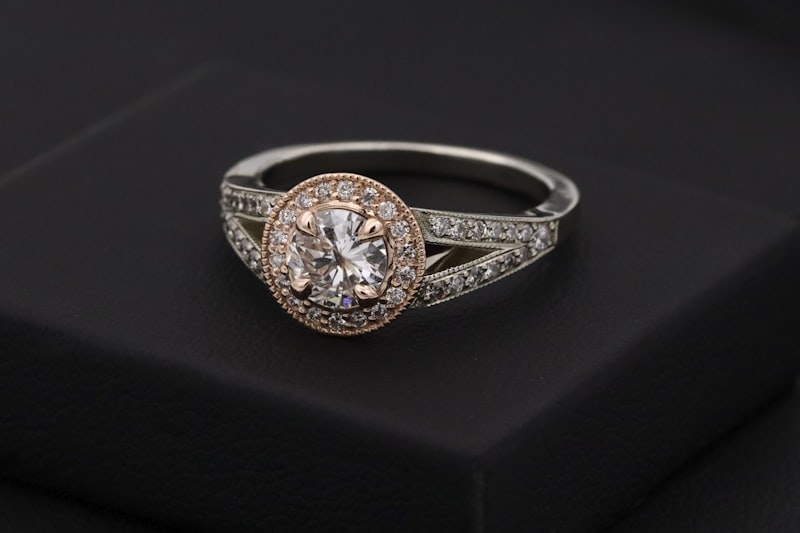
When purchasing a diamond, understanding the 4Cs—Cut, Color, Clarity, and Carat weight—is essential for making an informed decision. Developed by the Gemological Institute of America (GIA) in the 1950s, this universal grading system provides a standardized language for evaluating diamond quality.
Cut: The Most Important Factor
Of all the 4Cs, cut has the greatest influence on a diamond's beauty. Cut refers not to a diamond's shape, but to how well its facets interact with light. A well-cut diamond will display exceptional brilliance (white light reflection), fire (spectral colors), and scintillation (sparkle).
The GIA grades diamond cut on a scale from Excellent to Poor, considering:
- Brightness: Internal and external white light reflected from a diamond
- Fire: The scattering of white light into all the colors of the rainbow
- Scintillation: The amount of sparkle a diamond produces and the pattern of light and dark areas caused by reflections within the diamond
At Prestige Diamonds, we recommend prioritizing cut quality above all other factors. A diamond with an excellent cut will appear larger and more brilliant than a poorly cut diamond of the same carat weight.
Color: The Subtle Spectrum
Diamond color actually refers to the lack of color. The GIA color scale ranges from D (colorless) to Z (light yellow or brown). Colorless diamonds are the rarest and most valuable, as they allow maximum light to pass through, creating more sparkle.
| Grade Range | Description | Visibility |
|---|---|---|
| D-F | Colorless | Color differences virtually undetectable to the untrained eye |
| G-J | Near Colorless | Slight color detectable when compared to higher grades |
| K-M | Faint Color | Noticeable color, especially in larger diamonds |
| N-Z | Light Color | Obvious yellow or brown tint visible |
Expert Tip: For white gold or platinum settings, consider diamonds in the G-H range for the best value. Yellow or rose gold settings can complement diamonds in the I-K range beautifully.
Clarity: Nature's Fingerprint
Clarity measures the absence of inclusions (internal characteristics) and blemishes (external characteristics). These natural features, formed during the diamond's crystallization process, make each diamond unique—like nature's fingerprint.
The GIA clarity scale includes:
- FL (Flawless): No inclusions or blemishes visible under 10x magnification
- IF (Internally Flawless): No inclusions visible under 10x magnification
- VVS1-VVS2 (Very, Very Slightly Included): Inclusions difficult to see under 10x magnification
- VS1-VS2 (Very Slightly Included): Minor inclusions ranging from difficult to somewhat easy to see under 10x magnification
- SI1-SI2 (Slightly Included): Inclusions noticeable under 10x magnification
- I1-I3 (Included): Inclusions obvious under 10x magnification, may affect transparency and brilliance
Many SI1 and even some SI2 diamonds are "eye-clean," meaning their inclusions cannot be seen with the naked eye. These diamonds offer excellent value without compromising visual appearance.
Carat Weight: Size and Rarity
Carat is often confused with size, but it actually measures weight. One carat equals 200 milligrams, or 0.2 grams. The word "carat" comes from the carob seeds that were historically used to balance scales in ancient times.
Diamond prices increase exponentially with carat weight because larger diamonds are significantly rarer. A 2-carat diamond will cost more than double what two 1-carat diamonds of similar quality would cost combined.
Smart Shopping Tip: Consider diamonds slightly below popular carat weights (0.90ct instead of 1.00ct, or 1.90ct instead of 2.00ct). The visual difference is negligible, but the price difference can be substantial.
Finding Your Perfect Balance
The ideal diamond depends on your priorities and budget. At Prestige Diamonds NJ, our GIA-certified gemologists help you navigate these factors to find a diamond that maximizes beauty within your investment range.
We recommend this prioritization for most buyers:
- Cut: Never compromise on cut quality—it's the primary driver of beauty
- Carat: Determine your desired size based on the wearer's preference
- Color: Select based on setting metal and personal preference
- Clarity: Choose the lowest grade that's still eye-clean
Visit our Paramus showroom to compare diamonds side-by-side and discover how these factors interact in person. Our experts are here to guide you through every step of your diamond selection journey.