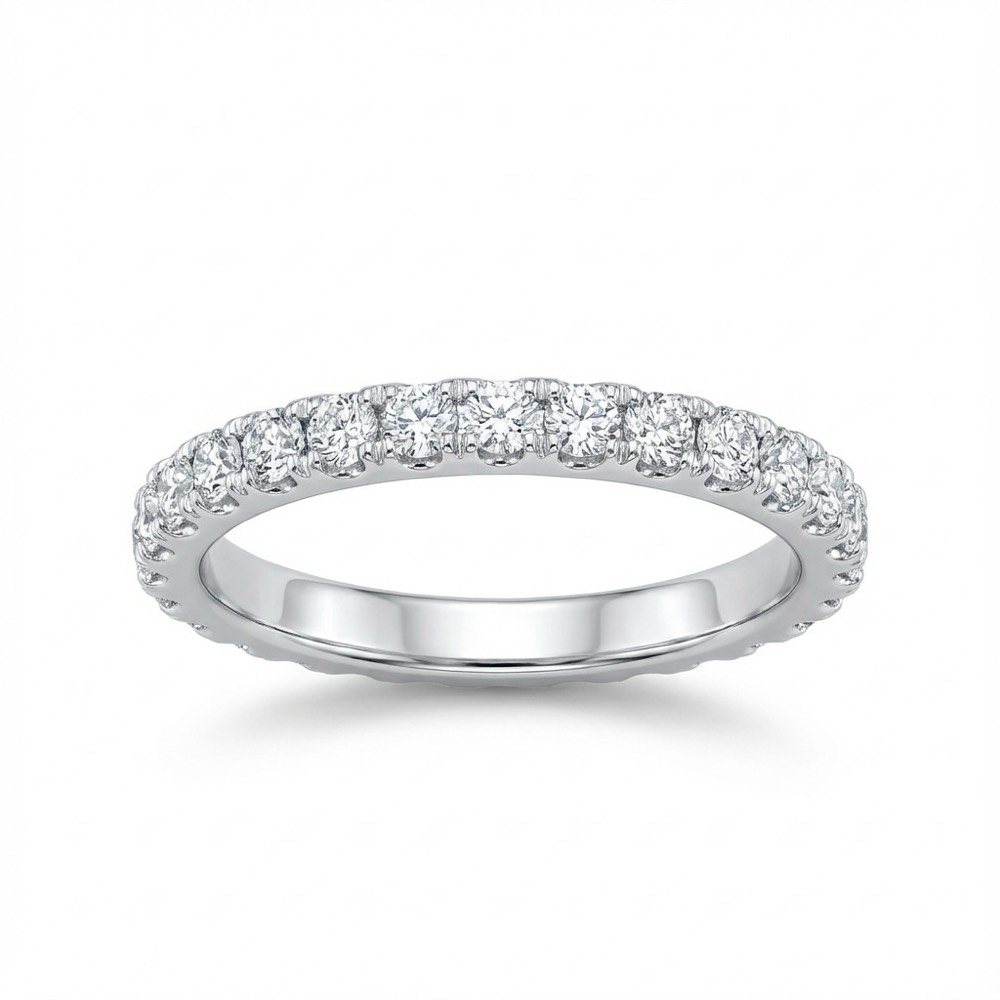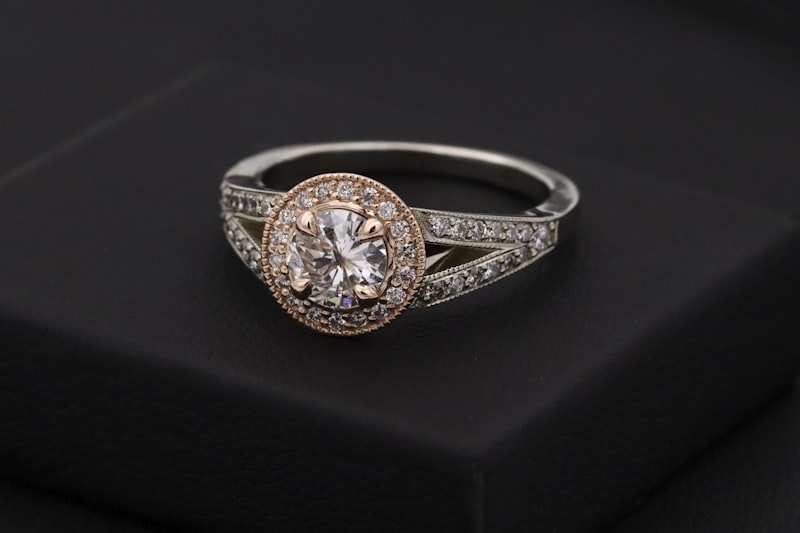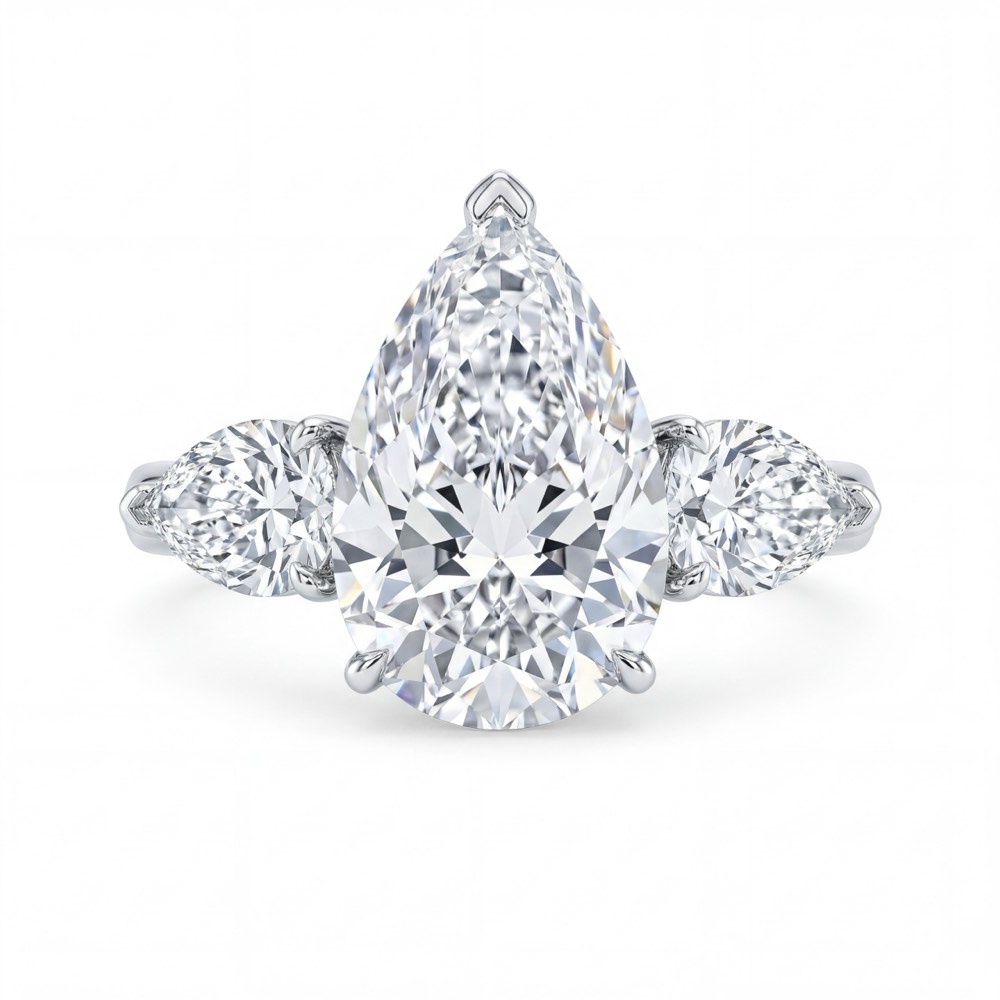
Yes. A lab-grown diamond is a diamond: the same carbon crystal as a mined diamond, with nearly the same chemical, optical and physical properties, according to the Gemological Institute of America. What it is not is mined, and federal guidance says it has to be sold as "laboratory-grown" or "laboratory-created," never as "real" or "natural."
That second part trips up a lot of shoppers, and some sellers. Here is what the definitions actually say, how a lab-grown diamond differs from cubic zirconia and moissanite, and what to look for when you buy one.
What makes something a diamond?
The Federal Trade Commission's Jewelry Guides define a diamond by what it is made of, not where it came from: "A diamond is a mineral consisting essentially of pure carbon crystallized in the isometric system. It is found in many colors. Its hardness is 10; its specific gravity is approximately 3.52; and it has a refractive index of 2.42." (16 CFR 23.12)
A lab-grown diamond meets that description. GIA puts it this way: "Like their natural counterparts, laboratory-grown diamonds have the same crystal structure, consisting of tightly bonded carbon atoms. This results in nearly the same chemical, optical and physical properties as natural diamonds." (GIA 4Cs)
Then why can't a jeweler call them "real"?
Because the same federal guidance treats "real" and "natural" as claims about origin. The Jewelry Guides say: "It is unfair or deceptive to use the word "real," "genuine," "natural," "precious," "semi-precious," or similar terms to describe any industry product that is manufactured or produced artificially." (16 CFR 23.27)
The Guides also require the qualifier to sit right in front of the stone's name, "immediately preceded with equal conspicuousness by the word "laboratory-grown," "laboratory-created," "[manufacturer name]-created," or some other word or phrase of like meaning" (16 CFR 23.25). So the honest answer to "is it real?" is: it is a diamond, it was grown in a laboratory, and it should be named that way every time.
That is why every diamond piece in our online catalog carries "Lab-Grown" in its name, on the product page, the collection tile and the checkout line, rather than in a footnote.
Is "cultured diamond" the same thing?
It can be, with a condition. The Guides allow "cultured" for laboratory-created diamonds with the same properties as mined diamonds only "if the term is qualified by a clear and conspicuous disclosure" such as "laboratory-created" or "laboratory-grown," "conveying that the product is not a mined stone" (16 CFR 23.12(c)(3)). If you see "cultured" on its own, ask.
How is a lab-grown diamond different from cubic zirconia or moissanite?
Completely. Cubic zirconia (CZ) and moissanite are simulants: different materials that look like a diamond. GIA: "Common simulants are often created with glass, moissanite and cubic zirconia (CZ). They are completely unrelated to diamonds at the atomic level and are easily identifiable by their optical and physical characteristics."
The FTC draws the same line. In 2019 it sent warning letters to eight jewelry companies and advised marketers "not to describe simulated diamonds in a way that may falsely imply they have the same optical, physical, and chemical properties of mined diamonds" (FTC Business Blog, April 2, 2019). A lab-grown diamond can make that claim; a simulant cannot. For a side-by-side of the two most common choices, see our moissanite vs. diamond comparison.
How are lab-grown diamonds made?
GIA describes two main methods:
- High-Pressure, High-Temperature (HPHT): a capsule containing a source of carbon and a mixture of metals is heated to 1300-1600°C (2400-2900°F) under pressures of 5-6 GPa, which GIA likens to conditions 150-190 km beneath the Earth's surface.
- Chemical Vapor Deposition (CVD): carbon-containing gas is broken down at near-vacuum pressure, and carbon crystallizes onto diamond seeds at 700-1200°C, building the crystal layer by layer.
Either way, the result is diamond. The difference is history: natural diamonds formed millions to billions of years ago, while laboratory-grown diamonds, in GIA's word, "are young."
Can you tell a lab-grown diamond apart by looking?
Usually not. GIA: "By eye, the difference can potentially be indistinguishable. However, they are separated by vastly different growth histories, which experienced gemological laboratories like GIA can detect with advanced instrumentation." We cover the practical checks in how to tell if a diamond is lab-grown.
What this means when you shop
- The name should say it. "Lab-grown," "laboratory-created" or similar, right before "diamond," on the tag, the listing and the receipt.
- "Real" and "natural" should never describe a lab-grown stone. If a seller uses those words for one, that is a red flag.
- Ask what paperwork comes with the piece. If a grading report is offered, it should identify the stone as laboratory-grown.
- Compare like with like. Total carat weight, metal and setting style matter more to the look than the word "diamond" does. Our lab-grown vs. natural comparison covers price and value.
See lab-grown diamonds in person in Paramus
Every diamond in our online catalog is lab-grown and named that way, from rings to tennis bracelets. If you would rather see the difference between lab-grown, moissanite and CZ side by side, book a visit to our showroom inside The Jewelry Center on Route 4.
Prestige Diamonds NJ
327 E State Route 4, Paramus, NJ 07652
(201) 488-4280