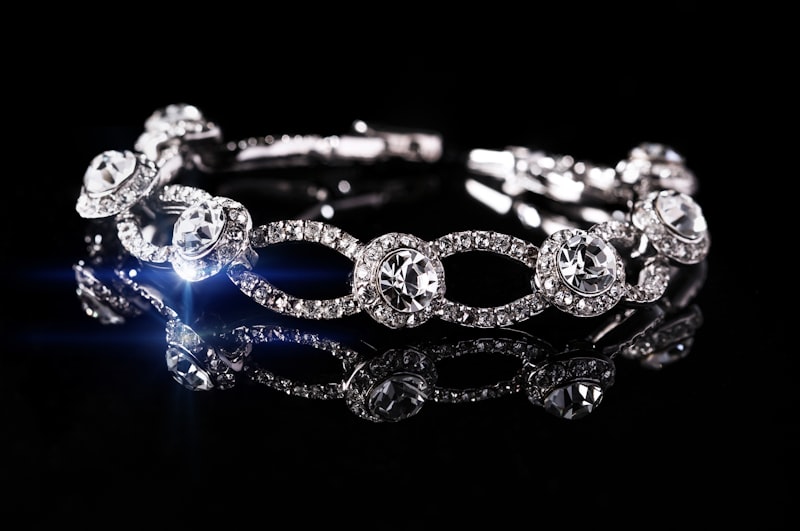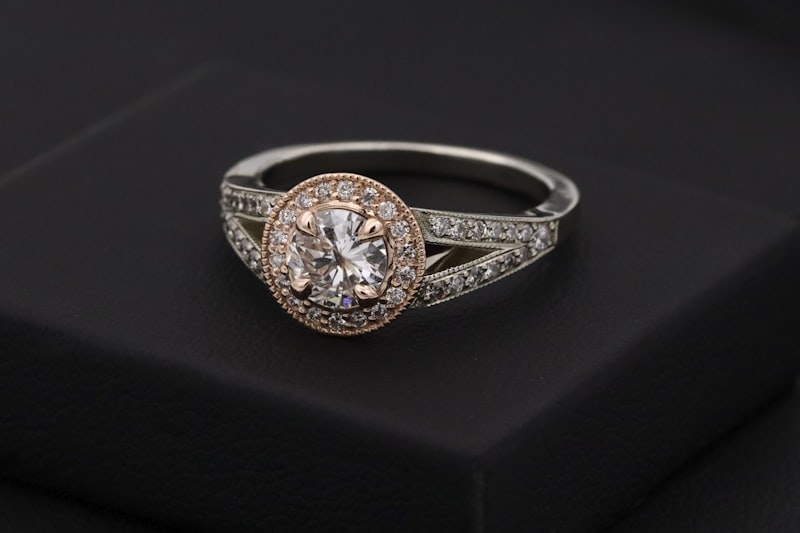
If you're shopping for an engagement ring, you've likely encountered moissanite as an alternative to diamond. Created in a laboratory, moissanite offers impressive sparkle at a fraction of the cost. But is it the right choice for you? Let's compare these two stones across every dimension that matters.
What Is Moissanite?
Moissanite was first discovered in 1893 by Nobel Prize-winning chemist Henri Moissan in an Arizona meteor crater. Natural moissanite is incredibly rare, so virtually all moissanite available today is lab-created. It's composed of silicon carbide (SiC), a completely different chemical composition from diamond (pure carbon).
Brilliance and Fire
Moissanite actually has a higher refractive index (2.65-2.69) than diamond (2.42), meaning it bends light more and produces more "fire" (the rainbow flashes of color you see). Some people love this extra sparkle; others feel it looks different from diamond's more balanced brilliance. In larger stones (over 1 carat), the difference becomes more noticeable—moissanite can appear more "rainbow" while diamonds show more white light.
Hardness and Durability
| Property | Diamond | Moissanite |
|---|---|---|
| Mohs Hardness | 10 | 9.25 |
| Scratch Resistance | Highest possible | Excellent |
| Heat Resistance | Burns at ~1,562°F | Up to ~2,000°F |
| Toughness | Good (can chip on edges) | Excellent |
Both stones are excellent for daily wear. Moissanite's 9.25 Mohs rating means it resists scratching from everything except diamond. For practical purposes, both are lifetime stones that won't cloud, degrade, or lose their polish.
Color
Early moissanite had a noticeable yellowish or greenish tint that made it easy to distinguish from diamond. Modern "Forever One" and premium-grade moissanite is nearly colorless (equivalent to D-E-F diamond color), making visual distinction much harder. However, under certain lighting conditions, some moissanite can still exhibit a slight warm or greenish cast.
Cost Comparison
This is where moissanite truly shines as an alternative. A 1-carat equivalent round moissanite typically costs $300-$600, compared to $4,000-$8,000+ for a comparable natural diamond. Lab-grown diamonds fall in between at roughly $800-$2,000 for the same size.
Resale and Long-Term Value
Natural diamonds retain approximately 30-50% of retail value on resale. Lab-grown diamonds currently have minimal resale value. Moissanite has essentially no resale value. If long-term financial value matters to you, natural diamond is the clear winner. If the ring is purely a symbol of love with no investment consideration, the cost savings of moissanite or lab-grown diamond may be more appealing.
Can People Tell the Difference?
To the untrained eye in normal viewing conditions, high-quality moissanite and diamond look very similar. A jeweler with a loupe can easily distinguish them by the double refraction in moissanite (diamonds are singly refractive). Most casual observers will not notice a difference, especially in smaller stones under 1 carat.
Our Perspective
There's no universally "right" answer—it depends on your priorities. If maximum sparkle on a budget is your goal, moissanite is an excellent option. If timeless value, tradition, and the rarity of a natural gemstone matter to you, a diamond remains unmatched.
At Prestige Diamonds in Paramus, NJ, we carry both GIA-certified natural diamonds and lab-grown diamonds. We're happy to show you stones side-by-side so you can compare in person and make the choice that feels right for you. Visit us at 327 E State Route 4, or call (201) 488-4280.