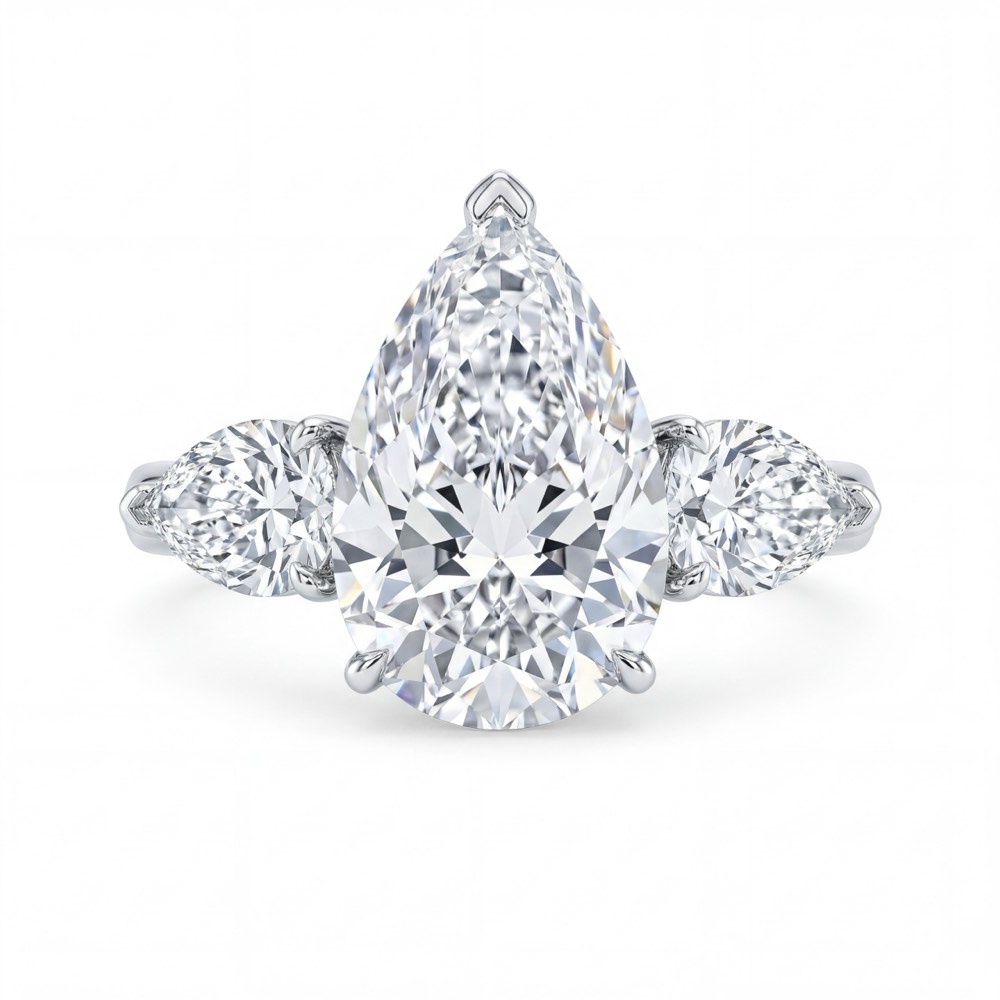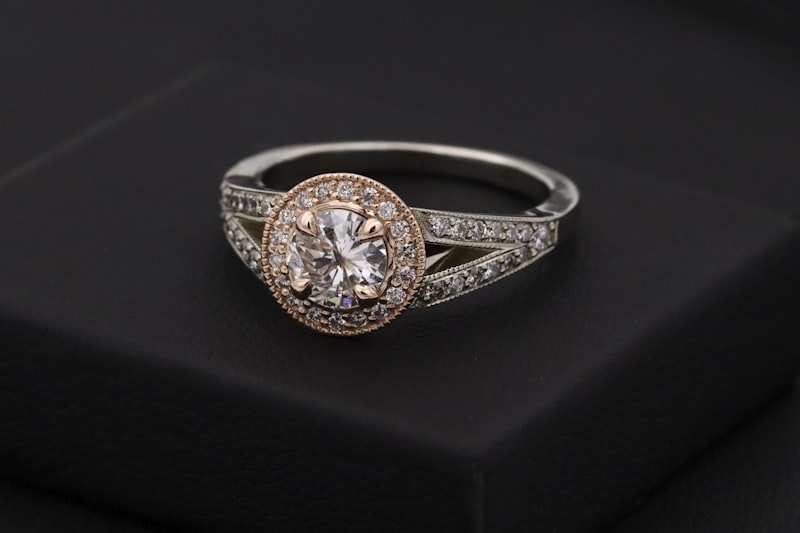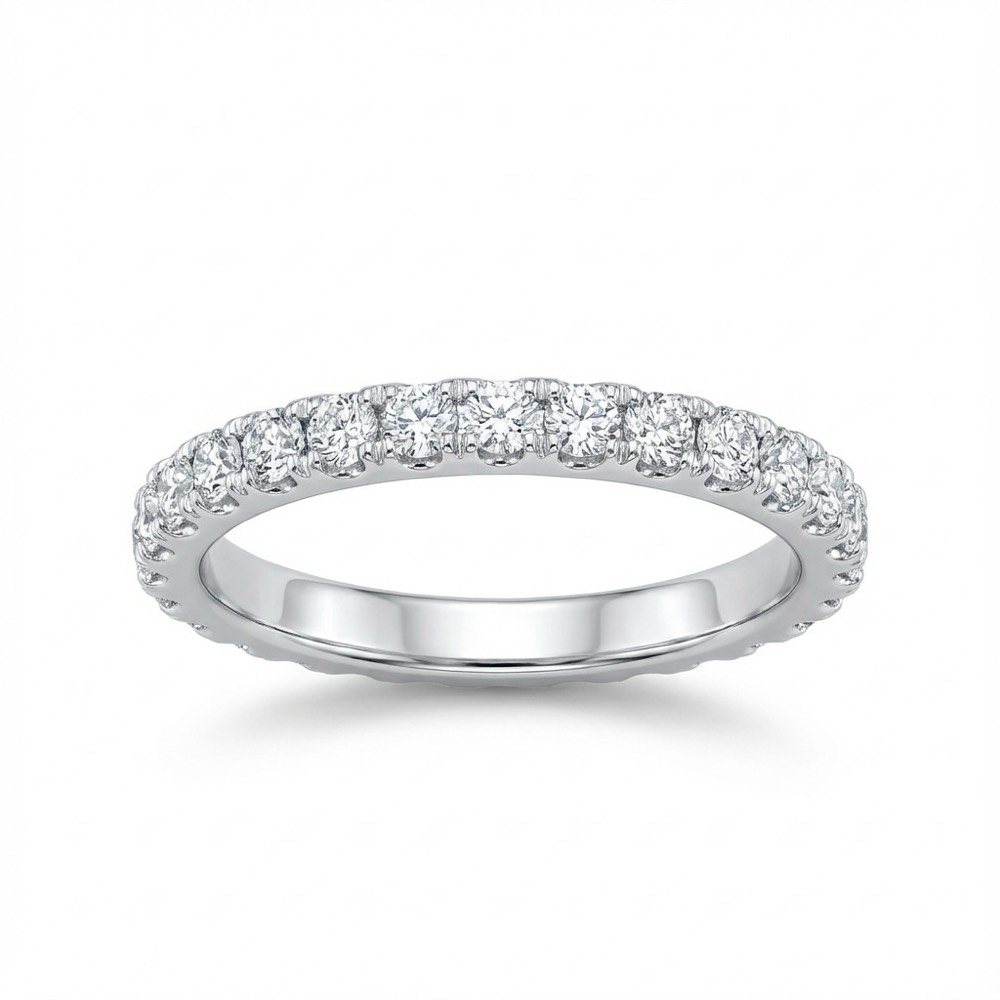
You usually can't tell by looking, and neither can most jewelers without equipment. GIA says lab-grown and natural diamonds can be indistinguishable by eye and are separated with advanced instruments that read how the crystal grew. As a buyer, the checks that actually work are the grading report, the girdle inscription, and a seller who names the stone correctly.
Why can't you see the difference?
Because both are diamond. GIA explains that lab-grown diamonds have "the same crystal structure, consisting of tightly bonded carbon atoms," which "results in nearly the same chemical, optical and physical properties as natural diamonds. By eye, the difference can potentially be indistinguishable." (GIA 4Cs)
The same reasoning applies to the quick "is it a diamond?" checks people find online. They can help separate a diamond from glass or cubic zirconia, but a lab-grown diamond is a diamond, so those checks cannot answer whether it came from a mine or a laboratory.
How do gemological labs tell them apart?
By reading the growth history inside the crystal. GIA: "The species, distributions and relative concentrations of small atomic-level irregularities in the crystal and impurities, scientifically known as defects, reveal whether a diamond is natural or lab-grown. Specially developed screening equipment and advanced testing at gemological laboratories like GIA exploit these differences and ensure that the two materials can be confidently separated."
GIA also makes a desktop screener for jewelers, the iD100, which it says helps "distinguish natural diamonds from laboratory-grown diamonds, diamond simulants and some treated diamonds in under two seconds." A full laboratory exam goes further: GIA says it can determine whether a lab-grown diamond was grown by HPHT or CVD, and its Laboratory-Grown Diamond Report "also states whether there is evidence of any post-growth treatments."
Check the grading report and the girdle inscription
If a lab-grown diamond comes with a laboratory report, the report should say so plainly. For its lab-grown reports, GIA says the "diamond's girdle is laser inscribed with the term "Laboratory-Grown"" along with its report number (GIA Laboratory Services). The inscription is microscopic, so ask the jeweler to show it to you under magnification and match the number to the report.
Not every lab-grown diamond is sent to a lab, especially small stones in pavé, eternity bands and tennis bracelets. For those, the seller's description is your main record, which is why the next check matters.
Check how the seller names the stone
Federal guidance puts the burden on the seller. The FTC's Jewelry Guides say a lab-grown stone may only be called by a gem name if that name is "immediately preceded with equal conspicuousness by the word "laboratory-grown," "laboratory-created," "[manufacturer name]-created," or some other word or phrase of like meaning" (16 CFR 23.25).
In 2019 the FTC sent warning letters to eight companies over exactly this, noting that some ads used the word "diamond" "without disclosing close to the product depiction or name, or in the product description, that it was a lab-created or simulated stone" (FTC Business Blog, April 2, 2019). A listing, tag or receipt that says only "diamond" for a lab-grown stone falls short of that.
What to ask before you buy
- "Is this lab-grown or mined?" Get the answer in writing, on the receipt.
- "Does it come with a report? From which lab?" If yes, check that it identifies the stone as laboratory-grown and that the report number matches any inscription.
- "What is the total carat weight?" For multi-stone pieces, that is the combined weight of every stone. A carat is 200 milligrams (16 CFR 23.18).
- "Has the stone been treated?" A laboratory report, where there is one, states evidence of post-growth treatment.
How we handle it at Prestige Diamonds
Every diamond in our online catalog is lab-grown, and we name it that way on the product page, the collection pages and in your cart, not in fine print. If you are comparing a piece from somewhere else, bring it to our Paramus showroom and we will talk you through what the paperwork says. For background, read are lab-grown diamonds real diamonds? and our guide to diamond grading reports, or browse the lab-grown collection.
Prestige Diamonds NJ
327 E State Route 4, Paramus, NJ 07652
(201) 488-4280