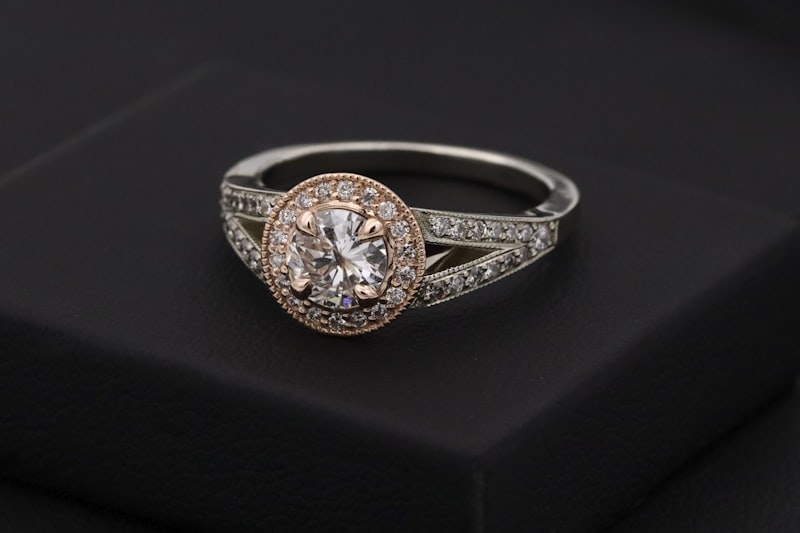
Halo settings have been one of the most popular engagement ring styles for over a decade. Here's everything you need to know about this sparkling design.
What Is a Halo Setting?
A halo setting features a center stone surrounded by a ring of smaller diamonds or gemstones. This design amplifies the center stone's presence and adds significant sparkle.
Types of Halo Settings
Single Halo
One row of accent diamonds surrounds the center stone. Classic and elegant, this is the most popular style.
Double Halo
Two concentric rows of accent diamonds for maximum impact and perceived size increase.
Hidden Halo
Accent diamonds sit beneath the center stone, visible only from the side. Offers sparkle without changing the top-down appearance.
Floral Halo
Accent stones arranged in petal-like formations for a romantic, vintage feel.
Geometric Halo
Angular halo shapes (hexagon, octagon) for a modern, architectural look.
Benefits of Halo Settings
- Perceived size: Can make center stone appear 0.25-0.50ct larger
- Extra sparkle: Accent stones add significant brilliance
- Protection: Halo can protect center stone's girdle
- Value: Get impressive presence at lower price than larger solitaire
- Finger coverage: Creates substantial presence on the hand
Considerations
- Maintenance: Small accent stones may need occasional replacement
- Cleaning: More crevices to keep clean
- Trend factor: More style-specific than timeless solitaire
- Wedding band pairing: May require contoured band to sit flush
Best Center Stones for Halos
- Round: Classic, maximizes sparkle
- Cushion: Vintage appeal, soft corners complement halo
- Oval: Elongates finger, modern romantic look
- Pear: Distinctive, dramatic appearance
Is a Halo Right for You?
Choose a halo if you love sparkle, want maximum presence for your budget, and don't mind the trend-specific nature. Choose a solitaire if you prefer timeless minimalism and easy maintenance.